
Introduction
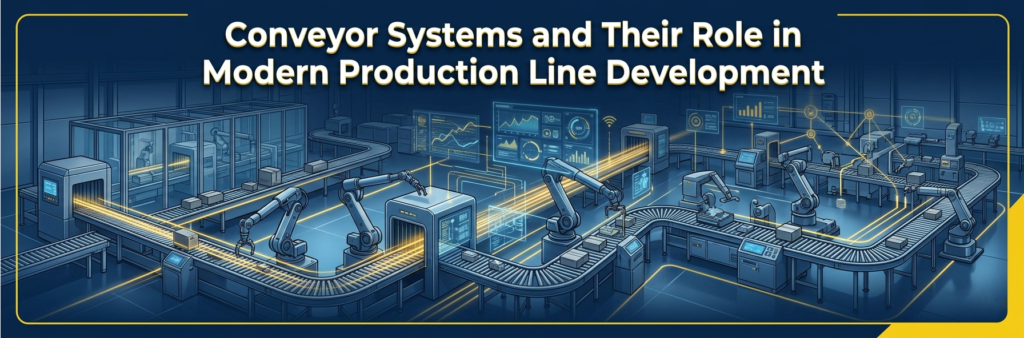
In today’s industrial world, speed, precision, and waste reduction are among the most important factors for any successful manufacturing operation. With the continuous evolution of automation and industrial technologies, Conveyor Systems have become a core component of modern factories.
They play a crucial role in transporting raw materials and finished products efficiently and safely between different stages of production. Whether in food processing, pharmaceuticals, packaging, automotive, or heavy industries, selecting the right conveyor system can significantly improve productivity and reduce operational costs.
In this article, we will explore what conveyor systems are, their importance, types, applications, and how they enhance modern production efficiency.
What Are Conveyor Systems?
Conveyor Systems are mechanical handling equipment used to move materials or products automatically from one point to another within a facility or production line.
They eliminate the need for manual transportation, saving time, reducing labor effort, and ensuring a continuous and organized workflow.
These systems typically consist of belts, rollers, chains, or other moving surfaces designed according to the type of product and industrial environment. Each system is customized based on operational requirements and production goals.
Importance of Conveyor Systems in Manufacturing
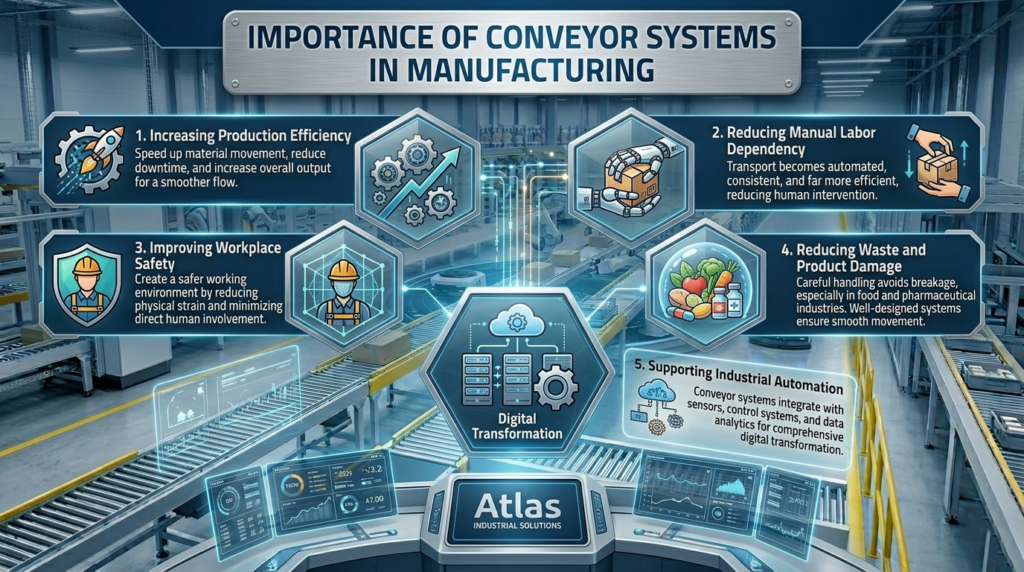
1. Increasing Production Efficiency
Conveyor systems speed up the movement of materials between production stages, reducing downtime and increasing overall output.
A smoother and faster flow of goods directly improves the efficiency of the entire production line.
2. Reducing Manual Labor Dependency
Manual handling of materials is time-consuming and prone to errors or product damage.
With conveyor systems, transportation becomes automated, consistent, and far more efficient, reducing the need for human intervention.
3. Improving Workplace Safety
Manual material handling in industrial environments can lead to injuries or accidents.
help create a safer working environment by reducing physical strain and minimizing direct human involvement in heavy or repetitive tasks.
4. Reducing Waste and Product Damage
Some products require careful handling to avoid breakage or defects, especially in food and pharmaceutical industries.
Well-designed ensure smooth movement, protecting products and reducing loss rates.
5. Supporting Industrial Automation
Modern factories are increasingly moving toward full automation and digital transformation.
integrate with sensors, control systems, sorting machines, and packaging lines to create a fully automated production flow.
Types of Conveyor Systems Used in Industry
Belt Conveyors
One of the most widely used types, belt conveyors use a continuous moving belt to transport goods.
They are commonly used in:
- Food industry
- Packaging lines
- Light and medium manufacturing
Roller Conveyors
Roller conveyors use a series of rotating rollers to move products, especially heavy or boxed items.
They are ideal for:
- Warehouses
- Distribution centers
- Shipping lines
Chain Conveyors
Chain conveyors are designed for heavy-duty applications where strong and durable movement is required.
They are commonly used in:
- Automotive industry
- Metal manufacturing
- Heavy equipment production
Flexible Conveyors
Flexible conveyors can be adjusted in shape and direction based on factory layout.
They are suitable for dynamic environments where production layouts change frequently.
How to Choose the Right Conveyor System
Selecting the right conveyor system depends on several important factors:
Product Type
Is the product lightweight, heavy, fragile, or bulky?
Operating Environment
Does the factory involve heat, humidity, or chemical exposure?
Production Speed Requirements
Different factories require different levels of speed and throughput.
Available Space
The system must fit efficiently within the factory layout.
Maintenance Requirements
Systems that are easier to maintain reduce downtime and operational costs.
The Role of Maintenance in Conveyor System Efficiency
Regular maintenance is essential for ensuring smooth operation and long system lifespan.
Poor maintenance can lead to:
- Production downtime
- Equipment failure
- Reduced efficiency
- Increased operational costs
Key maintenance practices include:
- Routine inspections
- Lubrication of moving parts
- Belt and roller condition checks
- Monitoring motors and control systems
How Atlas For Industrial Solutions Supports Industrial Development
Atlas For Industrial Solutions provides integrated solutions for designing, implementing, and upgrading conveyor systems tailored to each factory’s needs.
Their services include:
- Custom conveyor system design
- Production line development
- Installation and commissioning
- Maintenance and technical support
- Industrial automation solutions
- Spare parts manufacturing
The company focuses on improving operational efficiency, reducing downtime, and increasing productivity using advanced industrial technologies.
The Future of Conveyor Systems in Industry
With rapid technological advancement, conveyor systems are becoming smarter and more efficient than ever before.
Future trends include:
- AI-powered monitoring systems
- Predictive maintenance technologies
- Smart sensors for fault detection
- Remote system control
- Energy-efficient designs
These innovations make modern conveyor systems a key investment for any factory aiming for long-term growth and competitiveness.
Conclusion
Conveyor Systems are a fundamental part of modern industrial production, improving efficiency, reducing costs, enhancing safety, and supporting full automation in manufacturing environments.
Choosing the right system and maintaining it properly can significantly improve factory performance and ensure stable, continuous operation.
For businesses looking to upgrade or implement advanced conveyor systems, Atlas For Industrial Solutions offers professional, customized industrial solutions across multiple sectors.
Pingback: What Is Industrial Automation and How Does It Improve Manufacturing? - Atlas