
Introduction
In today’s highly competitive industrial environment, factories and production facilities rely on a wide range of mechanical, electrical, and automated systems to maintain smooth operations. These systems operate continuously, often under demanding conditions, making wear and tear an unavoidable part of the production process.
As machinery components age or become damaged, the need for high-quality industrial spare parts manufacturing and supply becomes critical. Having access to reliable spare parts not only ensures uninterrupted operations but also helps businesses maintain productivity, reduce downtime, and extend the lifespan of valuable equipment.
Industrial spare parts are among the most important factors influencing manufacturing performance and operational stability. Whether sourced from original equipment manufacturers (OEMs) or custom-engineered to meet specific requirements, quality spare parts play a vital role in maintaining equipment reliability and production efficiency.
This article explores the importance of industrial spare parts manufacturing and supply, the different types of spare parts used in modern industries, the challenges companies face in sourcing them, and the best practices for selecting a trusted supplier.
What Are Industrial Spare Parts?
Industrial spare parts are replacement components used to repair, maintain, or upgrade machinery and equipment in industrial facilities.
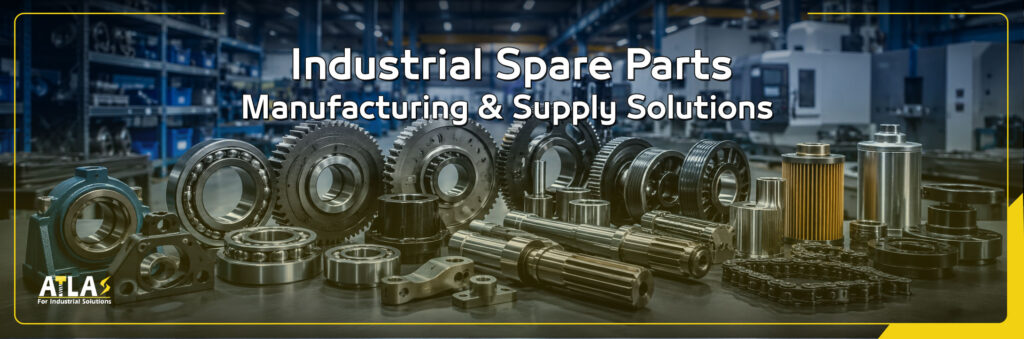
These parts cover a broad range of components, including:
- Industrial gears
- Rollers and pulleys
- Shafts and axles
- Conveyor belts
- Bearings
- Industrial chains
- Custom-manufactured metal components
- Precision mechanical parts
- Electrical and electronic components
- Automation and control system parts
The specific type of spare part required depends on the industry, production process, and equipment involved.

The Importance of Industrial Spare Parts Manufacturing and Supply
Ensuring Operational Continuity
A single failed component can bring an entire production line to a halt.
Unexpected downtime can result in:
- Missed production targets
- Delayed deliveries
- Increased operational costs
- Loss of revenue
Having the right spare parts readily available allows maintenance teams to restore operations quickly and minimize disruptions.
In many industries, even a few hours of downtime can cost thousands of dollars, making spare parts management a strategic necessity rather than a simple maintenance function.
Extending Equipment Lifespan
Replacing worn-out components with high-quality spare parts helps maintain machinery performance over a longer period.
This results in:
- Reduced capital expenditure
- Delayed equipment replacement
- Improved return on investment
- Better utilization of existing assets
Regular maintenance supported by reliable spare parts can significantly extend the operational life of industrial equipment.
Improving Production Efficiency
Machines equipped with properly manufactured and accurately fitted spare parts perform more efficiently.
Benefits include:
- Consistent machine performance
- Higher production output
- Better product quality
- Reduced risk of unexpected failures
Efficient machinery contributes directly to overall productivity and operational excellence.
Enhancing Workplace Safety
Damaged or low-quality components can pose serious safety risks within industrial facilities.
Using certified, high-quality spare parts helps:
- Protect workers
- Reduce workplace accidents
- Improve equipment reliability
- Maintain compliance with safety regulations
Safety is a critical factor in every industrial operation, and quality spare parts play a significant role in maintaining safe working conditions.
OEM Spare Parts vs. Custom-Manufactured Spare Parts
Original Equipment Manufacturer (OEM) Parts
OEM spare parts are produced by the original manufacturer of the equipment.
Advantages include:
- Exact specification matching
- Proven reliability
- Guaranteed compatibility
- Simplified installation
However, OEM parts may also present challenges such as:
- Higher costs
- Long lead times
- Limited availability
- Dependence on international suppliers
Custom-Manufactured Spare Parts
Custom spare parts are engineered and manufactured according to technical drawings, reverse engineering, or original component samples.
Their advantages include:
- Faster delivery times
- Lower procurement costs
- Design flexibility
- Availability for obsolete equipment
Custom manufacturing is often the ideal solution when OEM parts are unavailable, discontinued, or excessively expensive.
Most Common Types of Industrial Spare Parts
Conveyor System Spare Parts
Conveyor systems are among the most widely used equipment in manufacturing facilities.
Common conveyor spare parts include:
- Rollers
- Pulleys
- Conveyor belts
- Mounting brackets
- Drive motors
- Tensioning systems
These components are essential for maintaining smooth and efficient material handling operations.
Production Line Components
Production lines rely on numerous mechanical parts such as:
- Gears
- Shafts
- Couplings
- Industrial chains
- Material handling components
These parts are commonly found in manufacturing, packaging, and assembly operations.
Automation System Components
As factories continue adopting smart manufacturing technologies, demand for automation spare parts continues to grow.
Examples include:
- Sensors
- PLC controllers
- Servo drives
- Industrial control systems
- Human Machine Interface (HMI) components
These parts are critical for maintaining automated production processes.
Custom Metal Components
Many industrial facilities require specialized parts that are not commercially available.
These components are manufactured using advanced technologies such as:
- CNC Machining
- Laser Cutting
- Metal Fabrication
- Precision Engineering
Custom manufacturing allows businesses to obtain components tailored to their exact operational requirements.
The Industrial Spare Parts Manufacturing Process
Technical Assessment
The process begins with a thorough evaluation of the required component.
Engineers analyze:
- Functional requirements
- Dimensions
- Material specifications
- Operating conditions
This assessment ensures the final product meets performance expectations.
Engineering Design and Drawings
Modern CAD software is used to create or review technical drawings.
Engineering documentation typically includes:
- Detailed dimensions
- Tolerances
- Material specifications
- Manufacturing instructions
Accurate engineering data is essential for producing reliable spare parts.
Material Selection
Choosing the right material is a crucial step in the manufacturing process.
Common materials include:
- Carbon steel
- Stainless steel
- Aluminum
- Brass
- Engineering plastics
Material selection depends on factors such as load capacity, temperature, corrosion resistance, and wear conditions.
Manufacturing Operations
Industrial spare parts are produced through various machining and fabrication processes, including:
- Turning
- Milling
- Drilling
- Laser cutting
- Forming
- Welding
Advanced manufacturing equipment ensures high precision and consistent quality.
Inspection and Quality Assurance
Before delivery, every component undergoes rigorous quality control procedures.
Testing may include:
- Dimensional inspection
- Material verification
- Functional testing
- Compliance checks
Quality assurance ensures the manufactured parts meet customer specifications and industry standards.
The Importance of Spare Parts Inventory Management
Effective spare parts inventory management helps factories avoid costly interruptions.
Benefits include:
- Reduced downtime
- Better maintenance planning
- Lower inventory costs
- Improved spare parts availability
Many organizations use modern inventory management systems to monitor usage patterns and predict future spare parts requirements.
Proper inventory control ensures critical components are available when needed while avoiding excessive stock levels.
Challenges in Industrial Spare Parts Supply
Long Lead Times
Many facilities depend on imported components, which can involve extended shipping and procurement periods.
Delays in obtaining critical spare parts can negatively impact production schedules.
Rising Costs
Material price fluctuations, transportation expenses, and global supply chain disruptions can significantly increase procurement costs.
Businesses must balance quality, availability, and budget considerations when sourcing spare parts.
Obsolete Equipment
Many factories continue operating equipment that is no longer supported by original manufacturers.
Finding replacement components for outdated machinery can be challenging, making custom manufacturing an essential solution.
Finding Reliable Suppliers
Choosing the wrong supplier may result in:
- Poor-quality components
- Inconsistent performance
- Increased maintenance requirements
- Higher operational risks
Selecting a trusted partner is crucial for maintaining equipment reliability and production efficiency.
How to Choose the Right Spare Parts Manufacturing and Supply Partner
Industry Experience
Look for a supplier with extensive experience serving industrial sectors and understanding complex manufacturing environments.
Quality Standards
A reliable supplier should follow strict quality control procedures and use certified materials.
Quality assurance is essential for ensuring component durability and performance.
Fast Delivery Capabilities
Response time is especially important during emergency breakdown situations.
A supplier with efficient manufacturing and logistics capabilities can significantly reduce downtime.
Custom Manufacturing Expertise
Many industrial applications require specialized engineering solutions.
Choose a partner capable of designing and manufacturing custom spare parts according to specific operational requirements.
Technical Support
Engineering support adds tremendous value throughout the procurement process.
Experienced technical teams can help identify the most suitable solutions and improve equipment performance.
Atlas Industrial Solutions: Your Trusted Partner for Industrial Spare Parts
Atlas for Industrial Solutions provides comprehensive industrial spare parts manufacturing and supply services tailored to the needs of modern factories and production facilities.
Its capabilities include:
- Custom mechanical spare parts manufacturing
- Production line component supply
- Conveyor system spare parts manufacturing
- Equipment refurbishment and upgrading
- Engineering consultation and technical support
- Maintenance and modernization solutions
By combining engineering expertise with advanced manufacturing technologies, Atlas Industrial Solutions delivers high-quality components designed to maximize equipment reliability and operational efficiency.
The Future of Industrial Spare Parts Manufacturing
The industrial spare parts sector is evolving rapidly as manufacturers adopt advanced technologies and digital solutions.
Key trends shaping the future include:
Smart Manufacturing
Connected manufacturing systems improve production accuracy and efficiency while reducing waste.
3D Printing
Additive manufacturing enables faster production of complex spare parts with reduced lead times.
Artificial Intelligence
AI-driven analytics help optimize manufacturing processes and predict equipment failures before they occur.
Predictive Maintenance
Advanced monitoring systems identify potential issues early, reducing downtime and improving maintenance planning.
Digital Transformation
Modern factories increasingly rely on digital platforms to manage spare parts inventory, procurement, and maintenance operations.
These innovations are transforming the way spare parts are designed, manufactured, and supplied, delivering greater efficiency and cost savings across industries.
Conclusion
Industrial spare parts manufacturing and supply form the backbone of modern industrial operations. Reliable spare parts are essential for maintaining production continuity, improving equipment performance, reducing downtime, and maximizing operational efficiency.
Whether through OEM components or custom-engineered solutions, investing in quality spare parts helps businesses extend equipment lifespan, improve safety, and achieve long-term productivity goals.
As industrial technology continues to advance, companies that prioritize high-quality spare parts and work with trusted manufacturing partners will be better positioned to remain competitive in an increasingly demanding global marketplace.
Get in Touch Now
We are ready to help you anytime via WhatsApp or Email